
A ramble through the countryside of D H Lawrence
For reasons I don’t quite recall now, in my application to study comparative literature at university I wrote that I had read D H Lawrence. I hadn’t. But he was on my list. A friend had even bought me a lovely faux-leather bound copy of several collected works from W H Smiths as a birthday present but still this particular author had not managed to make it to the top of my reading pile. So it was I found myself being driven across the country by my father to an interview while reading Love Among the Haystacks (it was short) just in case I was asked about my claimed reading. Not the most auspicious introduction.
It was only recently that I returned to Lawrence (I didn’t end up studying comparative literature in the end). I was about to leave to catch the train to the South West to walk part of the coastal path and was casting about for a paperback to take with me. I had recently acquired a bag of second hand books from a friend and Women in Love was among these, so I grabbed it. It kept me suitably engrossed for the following week on the path, stopping to read with picnic lunches or at pubs in the evening. The fancy hardback edition remains in excellent condition on my shelf still.
Perhaps more so than the complex relationships of the novel, it is the drowning incident at Willey Water that stayed with me after finishing the book. It wasn’t until I first walked the route below that I discovered this episode is based on a real-life event at Moorgreen Reservoir. In 1892, Cecily Barber, aged six and daughter of a local colliery owner, drowned in the reservoir following a boating accident along with an older boy who tried to save her.
This walk is local to me and I’ve done it several times now. As well as following the edge of the Reservoir it takes in other locations that inspired Lawrence, including hayfields that are the setting for Love Among the Haystacks. I know this because the route is dotted with helpful information boards that highlight local features of what Lawrence called ‘the country of my heart’.
Ramble #2
Map and route: OS Explorer Map 260. Technical difficulties meant I was unable to track my route, but I’ve plotted it here.
Distance: 6 miles
Timing: It took me about three hours including taking notes and photographs, stopping to read information boards and a short detour to look for Felley Mill.
Start: Car park at Colliers Wood nature reserve, Eastwood, SK 481 480
Description:
Enter the reserve through the gate at the far end of the car park. Take the path branching left with the pond on your right. Head up the slope and at the T junction of paths, turn right. Where the path bends round to the right, look out for a wooden kissing gate tucked away on your left – go through this into a field. I was so enjoying the autumn colours on the day of my walk that I missed this despite having walked the route before. If you find yourself approaching houses at the edge of the reserve, you’ve gone too far!
Follow the field edge uphill. At the top, go through a gap in the hedge on your left and follow a grassy track to the road. Turn left here, cross the road and look for a public footpath sign for Greasley Church next to a track between houses. Follow this path, which squeezes between a hedge and railings before opening up again. Greasley Church tower, with its crocketed pinnacles, comes into view, poking out above trees on the horizon. Continue past barns and bits of machinery and across a field to enter the churchyard.
A highly weathered signboard here tells me this is Willey Green Church, that the young Lawrence helped a local farming family in the fields opposite and this inspired Love Among the Haystacks.
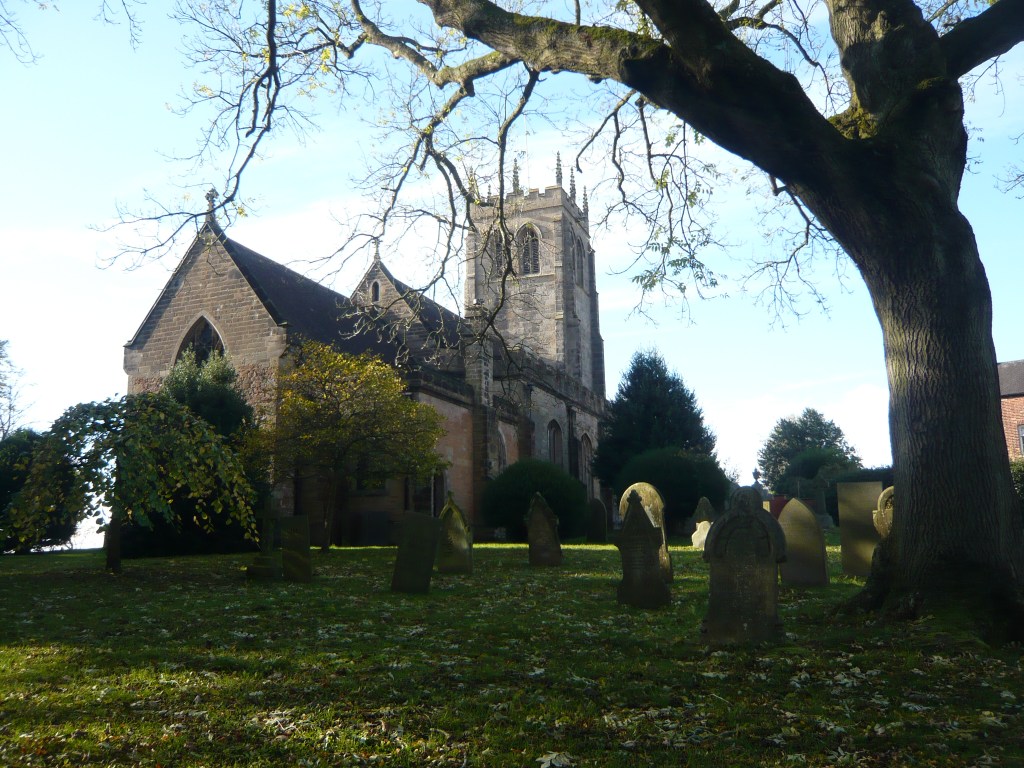
If you are like me you’ll spend a bit of time wandering around the churchyard inspecting the stones. Pass in front of the church and exit the churchyard by the gate onto the main road. Turn right then soon cross the road and enter a field at a footpath sign. Head uphill following the track past Greasley House on the left. It was a gloriously sunny autumn day when I did this walk and the hillside was covered in straw stubble, but I could easily imagine it as a hayfield. And here, just as I was imagining the landscape on a hot summer’s day over a hundred years ago, a bright red bi-plane suddenly appeared from behind the hill and flew, growling, in a circle overhead.
The two large fields lay on a hillside facing south. Being newly cleared of hay, they were golden green, and they shone almost blindingly in the sunlight.
Love Among the Haystacks, D H Lawrence
The path bends to the right at the top of the slope. Follow the grassy field edge path, keeping the hedge boundary to the left. Handwritten signs will help keep you on track. The hedgerows are varied and this day were bright with jewel-coloured berries – rowan, holly, hawthorn and rosehips.
Eventually, the path crosses a tiny wooden bridge over a stream hidden in a field corner. Head straight across the bottom of the next field, then over another bridge. Follow the narrow path as it skirts the edge the wonderfully named Brooksbreasting Farm to emerge at a bend in the road. Turn left and walk along the quiet lane.
At the small car park, turn right off the lane and follow the footpath along the edge of woodland. As the woods drop away, continue out to the edge of the M1, then follow the path around the field and alongside the motorway to enter the woods.
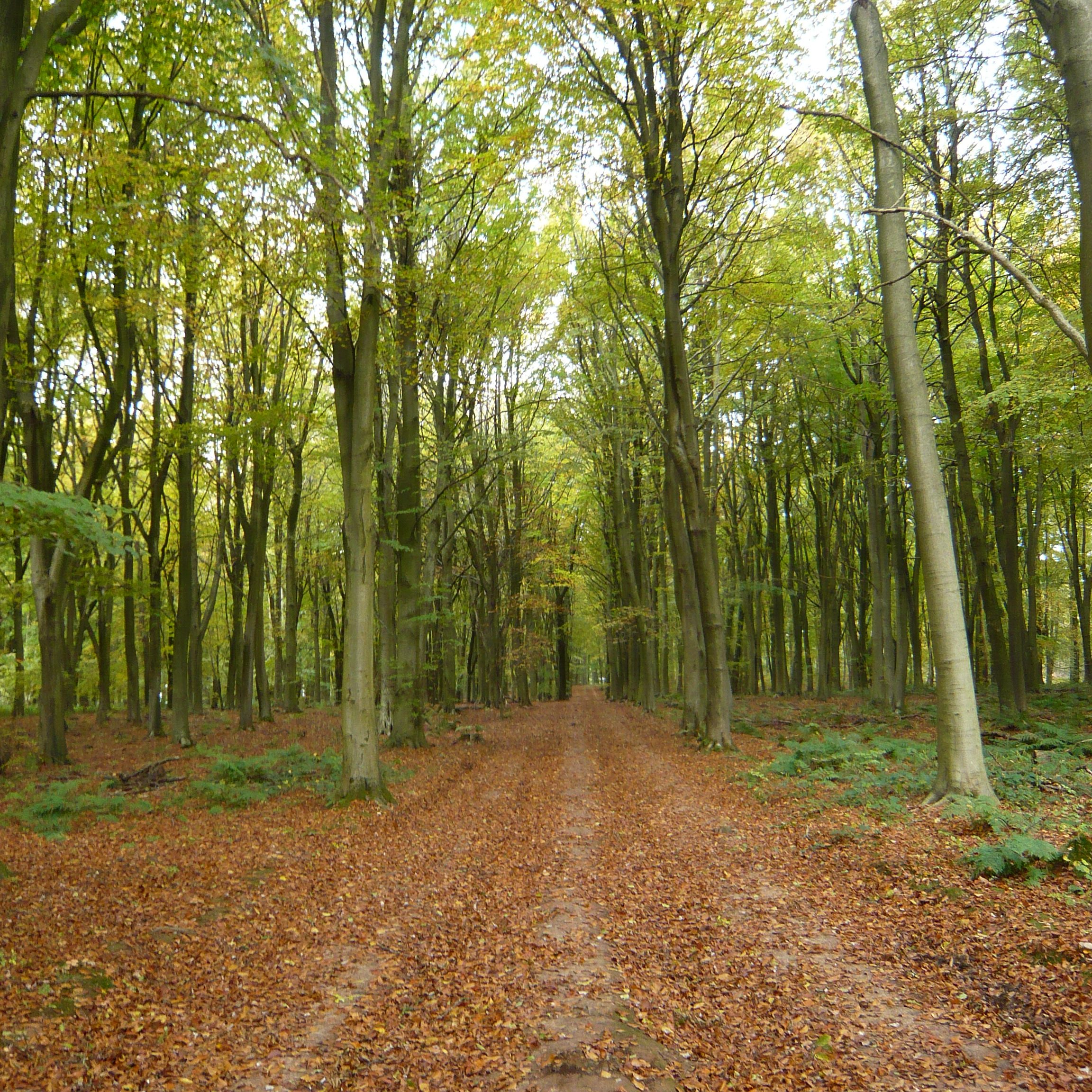
Follow the woodland path to a T-junction, turn right and then at the next junction follow the public footpath sign straight ahead along a beautiful wide avenue of beech trees. Just as I was putting my camera away after taking the picture above, I noticed movement off to my right. At first I thought it was a large dog, but then realised it was a small deer. It bounced across the path in front of me then stopped to observe me shyly from behind a tree. I carefully pulled my camera back out and just as I held it up to focus, the deer turned on its heel and bounded off into the woods.
The path emerges from the woodland onto a track atop a slope with a glorious view. I love it on a walk when the landscape changes suddenly like this, from the dappled, enclosed shade of the woodland, to a big sky, rolling hills and villages laid out below.
Turn left along the track. Here there is a handily sited bench, where I sat down for coffee and cake and to admire the view. The bench was provided by Felley Dog Walkers and was adorned with brass tags commemorating various dogs. Many had good old-fashioned dog names: Flossy, Meg and Bruno. But I noticed a few also had surnames, like Max Fowkes and Henry Gaskin. I’m intrigued by animals with surnames. I know someone with a cat called Mr Nigel Murray (the name came to him in a dream apparently) and they crop up in fiction every so often – I’m thinking in particular of the mad dog Tim Johnson in To Kill a Mockingbird and the tiger Robert Parker in Life of Pi.
Continue along the path keeping the woodland on your left. Avoid the temptation to follow the broad track as it descends, but continue along the edge of the woodland until you reach a rough row of trees perpendicular to the woods. Follow this downhill as signposted to emerge onto a tree lined footpath by a stream.
The route here turns left. However, I turned right first and took a short detour to investigate Felley Mill. Felley Mill also appears in Women in Love as the mill rented by Birkin. Disappointingly, though being marked on the OS map, no sign of Felley Mill remains – there was just a fragrant pile of conifer chips and what looked like giant Lego blocks made of concrete.
Returning to the route, the easy path follows the stream which then feeds into Moorgreen Reservoir. There is no public access to the Reservoir, but you can glimpse it at intervals through the trees.
And in this wise they arrived at Willey Water. The lake was blue and fair, the meadows sloped down in sunshine on one side, the thick dark woods dropped steeply on the other.
Women in Love, D H Lawrence
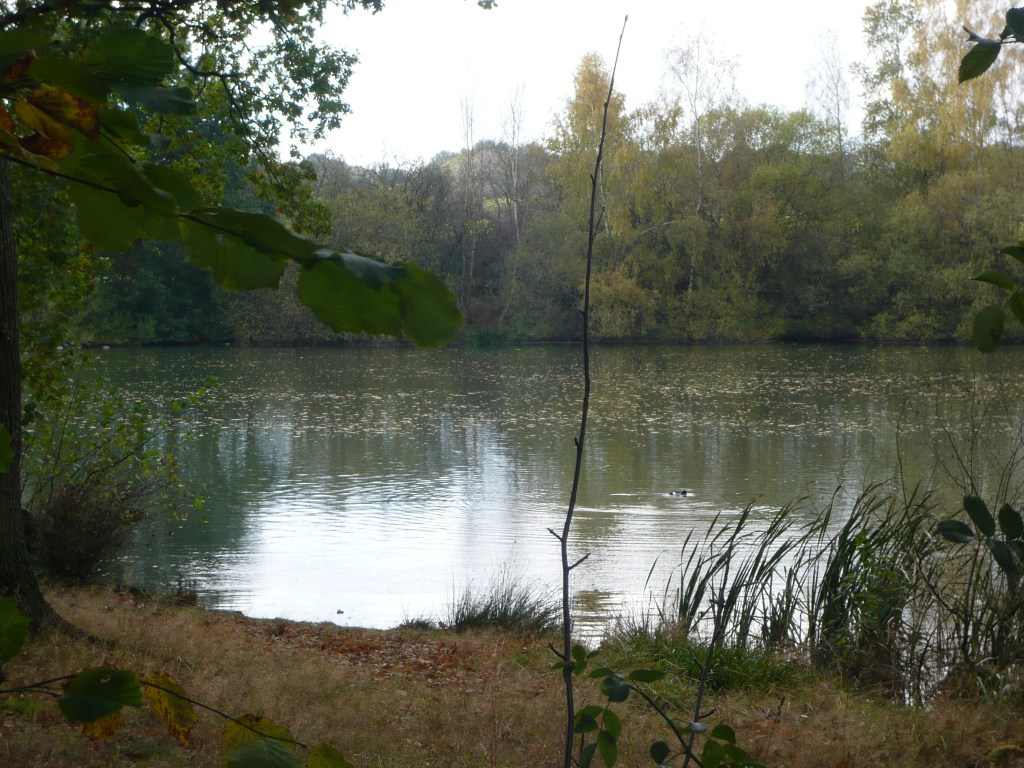
The path follows the edge of the reservoir then merges with a drive from the left and leads on to the road by Beauvale Lodge. Turn left along the road and then right on to Engine Lane to arrive back at the Colliers Wood car park.
Verdict: A short and fairly easy walk, but full of interest, demonstrating how, wherever you live in the UK, you rarely have to travel far for natural beauty and/or literary or historical links.


Leave a Reply